

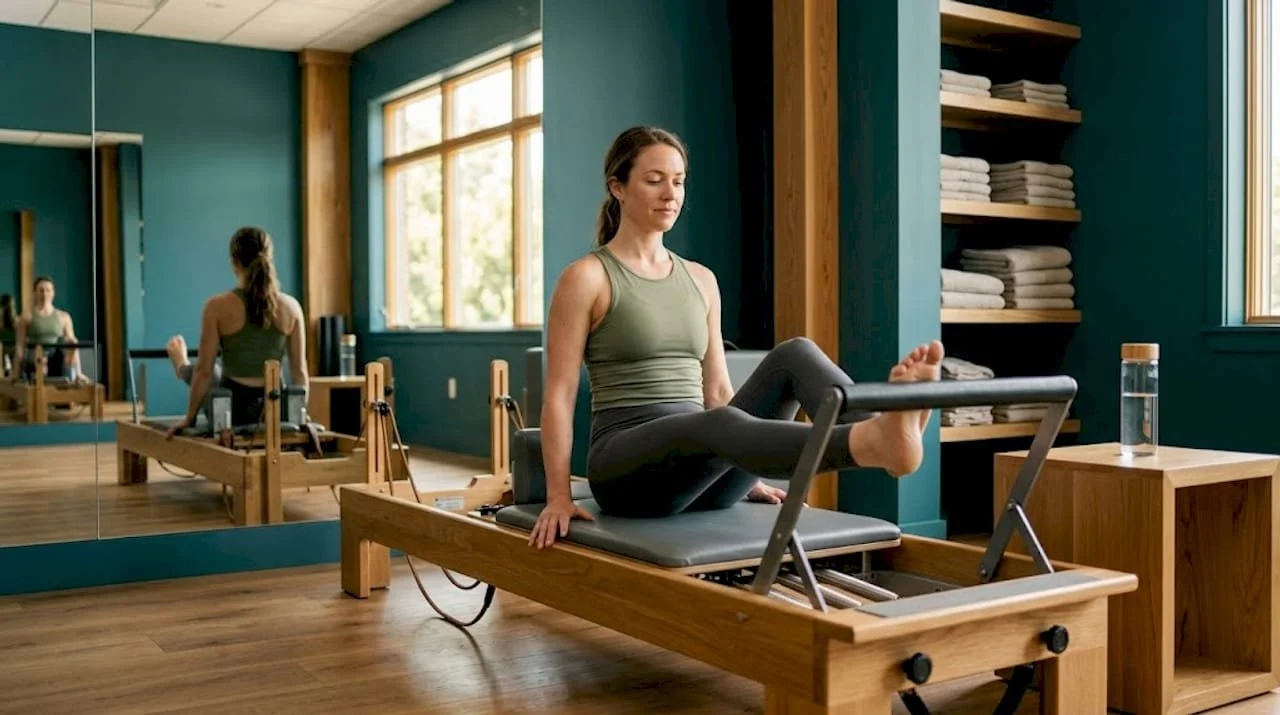
How the Pilates Reformer Helps Students Build Strength Without Harsh Impact Many people want to become stronger but do not enjoy workouts that rely on jumping, heavy strain or high-speed movement. The pilates reformer offers a different path. It helps students build strength through resistance, control and alignment, making it appealing for adults who want effective training without harsh impact. Low-impact movement is especially valuable for people managing busy work lives, joint sensitivity, postural issues or a return to exercise after a break. The reformer provides support and challenge at the same time. It can make the body work deeply while still allowing controlled, smooth movement.
Why low-impact strength matters
High-impact exercise is not suitable for everyone all the time. Some people find it too stressful on the joints. Others feel exhausted by workouts that focus only on intensity. Low-impact strength training gives the body another option. The reformer uses springs to create resistance. This resistance can be adjusted, which allows exercises to be tailored to the student’s level. Movements can be gentle, moderate or challenging depending on setup and control. This makes the practice accessible but not easy. Students still work hard, but the effort is organised.
Strength through precision
Reformer training often looks smooth, but it requires concentration. The carriage moves, the springs respond and the body must stay stable. This means students cannot rely on momentum. They need to control both the outward and return phases of movement. Precision makes the practice effective. Small movements can activate deep muscles when done correctly. Students may feel the core, legs, glutes, shoulders and back working in a focused way. This type of strength is useful because it supports real movement. It trains the body to work as a coordinated system.
Core support without aggressive crunching
Core training is one of the strongest benefits of the reformer. However, it does not rely only on repeated crunches. Many exercises require the core to stabilise the body while the arms or legs move. This helps students build functional core strength. The spine and pelvis learn to stay supported during movement, which can improve posture and daily comfort. For people who sit for long hours, this can be especially valuable.
Strength qualities the reformer may support
A consistent routine can help develop:
- Core stability
- Leg strength
- Glute activation
- Shoulder control
- Spinal awareness
- Balance and coordination
- Controlled movement endurance
These qualities help students feel stronger without needing harsh impact.
Support for joint-friendly movement
The reformer can support joint-friendly movement because exercises are controlled and adjustable. The equipment can assist the body in certain ranges or increase resistance when appropriate. This flexibility helps students practise according to their current ability. Joint-friendly does not mean careless. Alignment still matters. Teacher guidance helps students avoid strain and use the equipment safely.
Better posture through strength
Posture improves when the body has enough strength and awareness to support itself. The reformer helps train both. Students learn how the pelvis, spine, ribs and shoulders relate during movement. Over time, this can influence daily posture. A student may become more aware of how they sit, stand or carry tension. This awareness is part of the strength-building process.
Breath and effort
Breath helps students manage effort without unnecessary tension. During reformer exercises, students may be guided to inhale and exhale with specific movements. This improves coordination and focus. Many people hold their breath when exercising. Reformer Pilates helps retrain this habit by linking breath to movement. This can make effort feel calmer and more controlled.
A practice that can progress gradually
The reformer allows progression without sudden jumps in intensity. Springs can be adjusted, exercises can become more complex and movements can be refined over time. This makes the practice sustainable. Students can build strength week by week without feeling forced into a routine that overwhelms them. Consistency becomes easier when the practice feels challenging but manageable.
A focused environment for strength building
A studio such as Yoga Edition can support students by offering guided reformer sessions in a structured setting. Teacher attention is important because the equipment should be used with purpose, not guesswork. A good environment helps students focus on quality and progression.
Strength without punishment
The Pilates reformer helps students build strength without harsh impact by using controlled resistance, alignment and breath. It challenges the body deeply while respecting the need for smooth, joint-friendly movement. For adults who want to feel stronger, more stable and more confident, reformer training offers a practical path. It proves that strength does not need to be aggressive to be effective. It can be precise, intelligent and sustainable.
Comments are closed.