

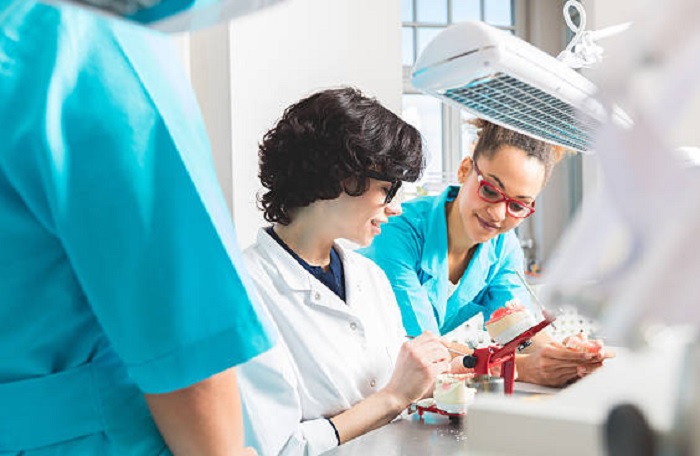
Dental laboratories play a crucial role in the field of dentistry, serving as the behind-the-scenes masterminds responsible for crafting the restorations and appliances that are integral to a patient’s oral health. While most people may only see the end result of a perfectly fitting crown or denture, the process of bringing these creations to life is a complex and intricate one. From concept to creation, dental laboratories are at the forefront of innovation, utilizing advanced technology and highly skilled technicians to produce precise and high-quality dental restorations. In this article, we will delve into the world of dental laboratories, exploring the behind-the-scenes operations and uncovering the intricate process of turning a concept into a tangible creation. We will discuss the role of dental laboratories in modern dentistry, the cutting-edge techniques and technology they employ, and the impact they have on improving the overall quality of patient care. Whether you are a dental professional or simply curious about the inner workings of dental laboratories, this article will provide a comprehensive overview of this vital aspect of the dental industry.
Precision and innovation in dentistry.
The field of dentistry has experienced remarkable advancements in recent years, driven by a relentless pursuit of precision and innovation. At the heart of these advancements lies the dental laboratory, where skilled technicians and state-of-the-art equipment collaborate to create dental restorations with unparalleled accuracy and aesthetics. Through the integration of cutting-edge technologies such as computer-aided design and computer-aided manufacturing (CAD/CAM) systems, dental laboratories are now able to fabricate highly precise and customized dental prosthetics, crowns, bridges, and orthodontic appliances. This level of precision not only ensures optimal fit and function but also enhances patient comfort and satisfaction. Furthermore, innovative materials and techniques, such as 3D printing and digital scanning, have revolutionized the speed and efficiency of the fabrication process, allowing for quicker turnaround times without compromising quality. The relentless commitment to precision and innovation within dental laboratories continues to drive advancements in dentistry, providing patients with superior dental restorations and practitioners with the tools they need to deliver exceptional oral care.
Behind the scenes of denture creation.
Operating behind closed doors, dental laboratories are the unheralded heroes of the dental world, where the intricate process of denture creation unfolds. Every denture begins with an impression of the patient’s mouth taken by the dentist. This impression is then sent to the dental laboratory, where skilled technicians meticulously pour plaster into the mold to create an exact replica. Using this replica as a foundation, the dental laboratory technician carefully carves and sculpts the shape of the denture, ensuring it fits seamlessly with the patient’s natural gum line. This delicate process requires an artist’s eye and a steady hand, as every nuance of the denture must be carefully crafted for both aesthetic appeal and functional performance. Once the base is perfected, the technician selects high-quality materials, such as acrylic resin, to fabricate the teeth. These teeth are individually customized to match the patient’s natural teeth in shape, size, and color, creating a harmonious and natural-looking smile. Finally, the denture is polished, refined, and adjusted to ensure proper fit and comfort. The intricate craftsmanship and attention to detail within dental laboratories are instrumental in providing patients with dentures that restore not only their smiles but also their confidence and quality of life.
Advancements in dental technology.
Advancements in dental technology have revolutionized the way dental laboratories operate, enhancing both efficiency and the quality of dental prosthetics. Digital dentistry has emerged as a game-changer, replacing traditional manual methods with computer-aided design and manufacturing (CAD/CAM). This technology allows for precise and accurate measurements, eliminating the need for physical impressions and reducing human error. Using intraoral scanners, dental laboratories can digitally capture the patient’s mouth, creating a virtual model that serves as the basis for designing restorations. CAD software then enables technicians to create highly personalized prosthetics, ensuring an optimal fit and superior aesthetic results. Additionally, the use of 3D printing technology in dental laboratories has further streamlined the production process, enabling the creation of intricate dental components with unmatched precision and speed. These advancements in dental technology not only benefit dental laboratories but also significantly improve patient outcomes by delivering durable, natural-looking restorations in less time.
In conclusion, the Dental Laboratory industry plays a crucial role in providing high-quality and personalized dental products for patients. From the initial concept to the final creation, dental technicians use their expertise and advanced technology to bring a smile to their clients’ faces. With constant innovation and dedication to excellence, the world of dental laboratories continues to evolve, meeting the ever-growing demands of the dental industry. As we look to the future, we can expect to see even more impressive advancements and developments in this important field.
Comments are closed.